University of North Carolina at Chapel Hill
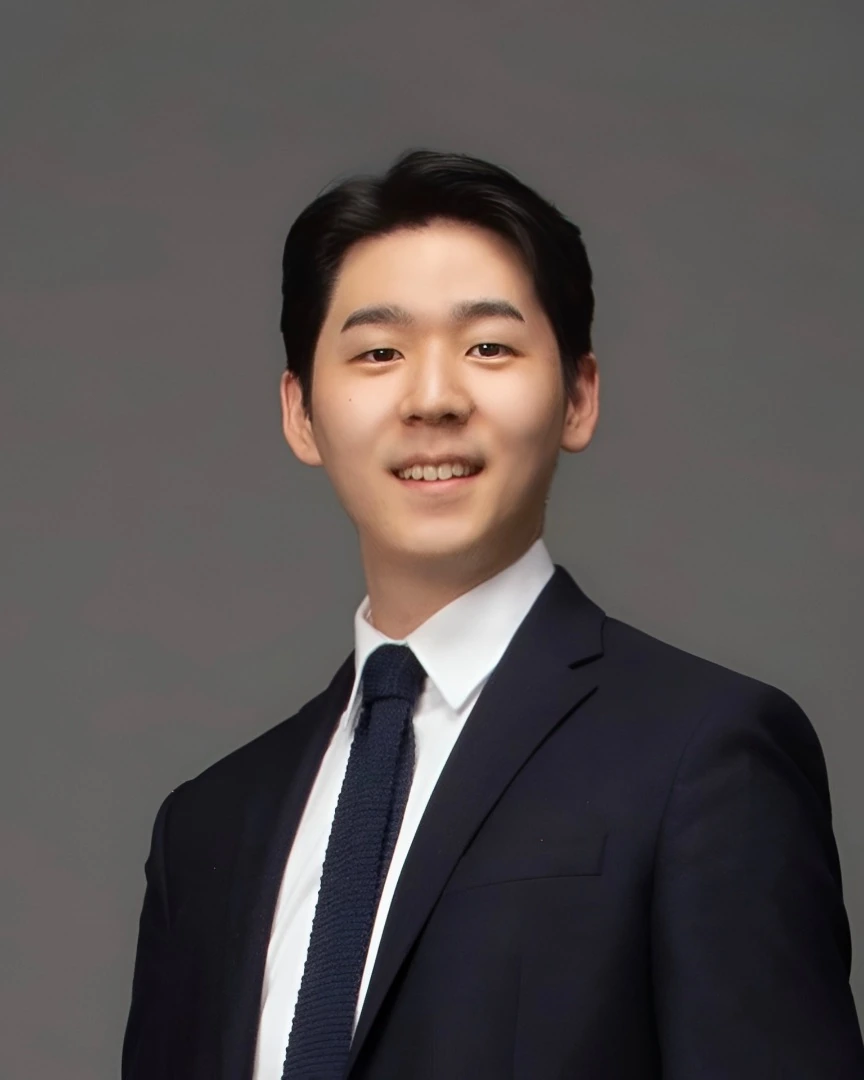
About
Almost everything I have built started with someone saying this takes too long.
The slow part is rarely the tooling. It is that nobody has worked out what the people on either end of the problem actually needed.
01The through-line
I started as an interpreter at the Joint Security Area, translating live between the US Army, UN Command and 4+ countries. That became the job in every role since: work out what users, engineers and executives each need, then build the thing they end up using.
I use AI as a tool, not a topic: acceptance criteria as the spec for Claude Code at Relate, and an eval gated in CI instead of my own taste at Calibr.
I graduate from UNC Kenan-Flagler in May 2027 and I am looking for an APM role.
02The path
Six roles in four years, four production MVPs built along the way, and the same job in each: work out what people need, then build it.
- United Nations Command, JSASquad leader and interpreter. Led a 10-person 24/7 team; built a transcriber 5+ frontline units adopted.
- QANDA, Series C AI edtechProduct Manager Intern. Killed a feature US students did not want; Mock Exam lifted completion 24%.
- Bain & Company, SeoulAssociate Consultant Intern. Exposed 40% return erosion on a $20M acquisition; the client walked away.
- Relate, YC S22Product Manager. Refocused the roadmap, then shipped the product in 5 days instead of 3 weeks.
- Calibr, founderBuilt it alone as engineer and designer; 250+ users, an eval gated in CI, an 8-person team.
- Capital OneProduct Management and Analytics Intern. Automated an 80,000-employee forecast from 6 hours to minutes.
- UNC Kenan-FlaglerB.S. Business Administration, GPA 3.85.
03How I work
I write down what would have to be true.
Most bad decisions rest on a belief nobody tested. At QANDA, that list would have caught the summary-note assumption on day one.
I build the measurement before I trust the output.
On Calibr, a rubric graded 100+ outputs and found a failure I had missed for weeks.
I bring the disagreement early, with evidence attached.
At Relate, a teardown, a prototype and a smoke test turned an opinion into a decision the founders could check.